Australia Has a Coal Fire Burning Underground for About 6,000 Years
Australia’s Burning Mountain is a coal seam fire smoldering about 30 metres underground for roughly 6,000 years, slowly moving through the coal.
Details
Burning Mountain in New South Wales, Australia is not a volcano or a mountain with visible flames. Beneath the site, a coal seam has been slowly smoldering underground for thousands of years. Australian authorities estimate the fire has been burning for about 5,500 years, while other widely cited estimates put it at roughly 6,000 years. The burning zone is currently around 30 metres below the surface. The fire moves extremely slowly, at roughly one metre per year. As the coal is consumed, the ground above it can crack, slump and change, leaving visible signs of the underground combustion. The slow movement is possible because the fire is not a roaring surface blaze. It is a low-intensity underground coal fire with limited oxygen, producing heat, smoke and gases rather than a large open flame. The site is commonly called Burning Mountain, while its proper name is Mount Wingen. Early European observers reportedly mistook the smoke and unusual surface conditions for signs of volcanic activity before the phenomenon was identified as a coal seam fire. Today the area is protected as Burning Mountain Nature Reserve, where visitors can follow a walking track and observe the unusual landscape from designated areas. The exact original ignition is not certain. A commonly cited explanation is that the coal seam became exposed and was eventually ignited, possibly by lightning. What is clear is that the fire has persisted for an extraordinary length of time, making Burning Mountain one of the best known examples of a long-lasting underground coal fire.
More videos
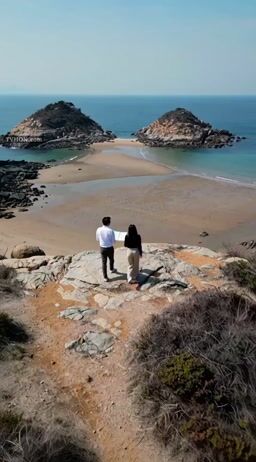
- South Korea’s Mysterious Sea Road Appears for About an Hour Twice a Year
Twice a year, spring tides reveal a temporary land path between two South Korean islands, letting people walk across the exposed seabed for about 40 to 60 minutes.
Tags: Earth
- The Severn Bore: The Natural River Wave You Can Surf for Miles
In England, rising ocean tides create the Severn Bore, a wave that travels upstream along the River Severn and lets surfers ride the moving water for miles.
Tags: Earth
- Itacolumite: The Rare Sandstone That Can Bend Without Breaking
Itacolumite is a rare type of sandstone that can bend without breaking when cut into thin strips, and it has been found in Brazil, the United States, and India.
Tags: Earth
- How Earthquakes Could Help Form Giant Gold Nuggets
Earthquake pressure can make quartz generate electricity, helping dissolved gold in underground fluids gather and grow into large nuggets.
Tags: Earth
- Why Chewing Gum Can Linger on Sidewalks for Years
Most modern chewing gum contains synthetic rubber and plastic-like materials that resist natural breakdown, so discarded gum may take an estimated 5 to 1,000 years to decompose.
Tags: Earth
- Ancient Lakes: The Remarkable Waters That Have Lasted Millions of Years
Ancient lakes have held water for over a million years, and the original post reports that 12 of the world's 20 ancient lakes are older than 2.6 million years.
Tags: Earth
- The Ocean Holds an Estimated 20 Million Tons of Gold
The oceans contain an estimated 20 million tons of gold, but it is so spread out that extracting it profitably is not currently practical.
Tags: Earth
- About Half of Earths Internal Heat Comes From Radioactive Decay
About half of Earths internal heat comes from radioactive decay, while much of the rest is ancient heat left over from the planets formation.
Tags: Earth
- Why Some Earthquakes Produce Strange Lights
Some earthquakes are linked to strange lights, from flashes to glowing orbs, but scientists still debate the cause, including rock-generated electricity and power-grid flashes.
Tags: Earth
- Movile Cave: The Underground Ecosystem That Runs Without Sunlight
Romania’s Movile Cave stayed isolated for millions of years, where sulfur and methane fuel a strange ecosystem without sunlight, including many species found nowhere else.
Tags: Earth
- The Ground Beneath Us Has Tides Too
The Moon and Sun tug on solid Earth, making the ground slowly rise and fall by up to about 40 cm during a tidal cycle.
Tags: Earth
- Study Reported a Massive Shark Die-Off 19 Million Years Ago
A 2021 study reported that open-ocean sharks may have lost over 90% of their abundance about 19 million years ago, but the cause and scale remain debated.
Tags: Earth